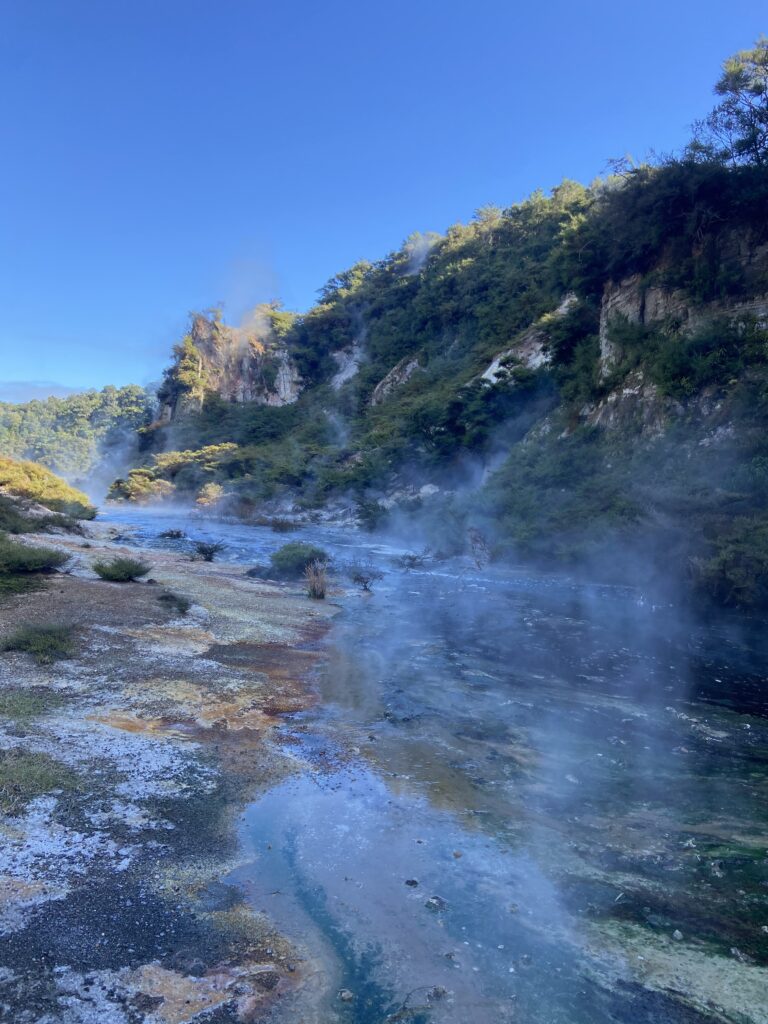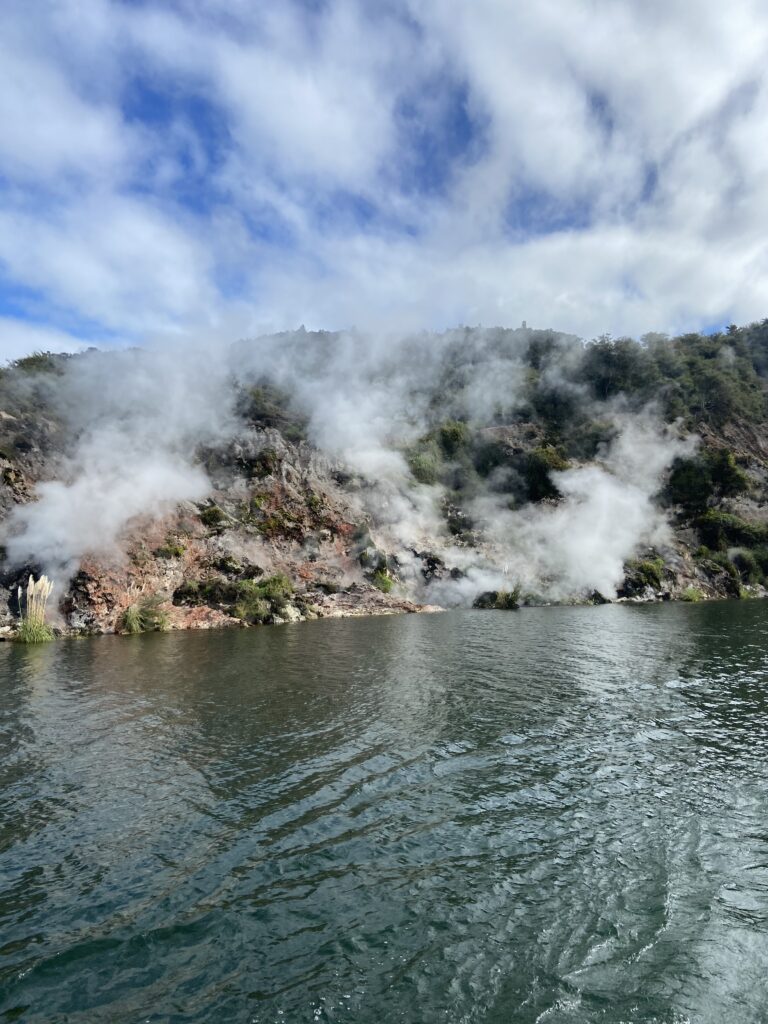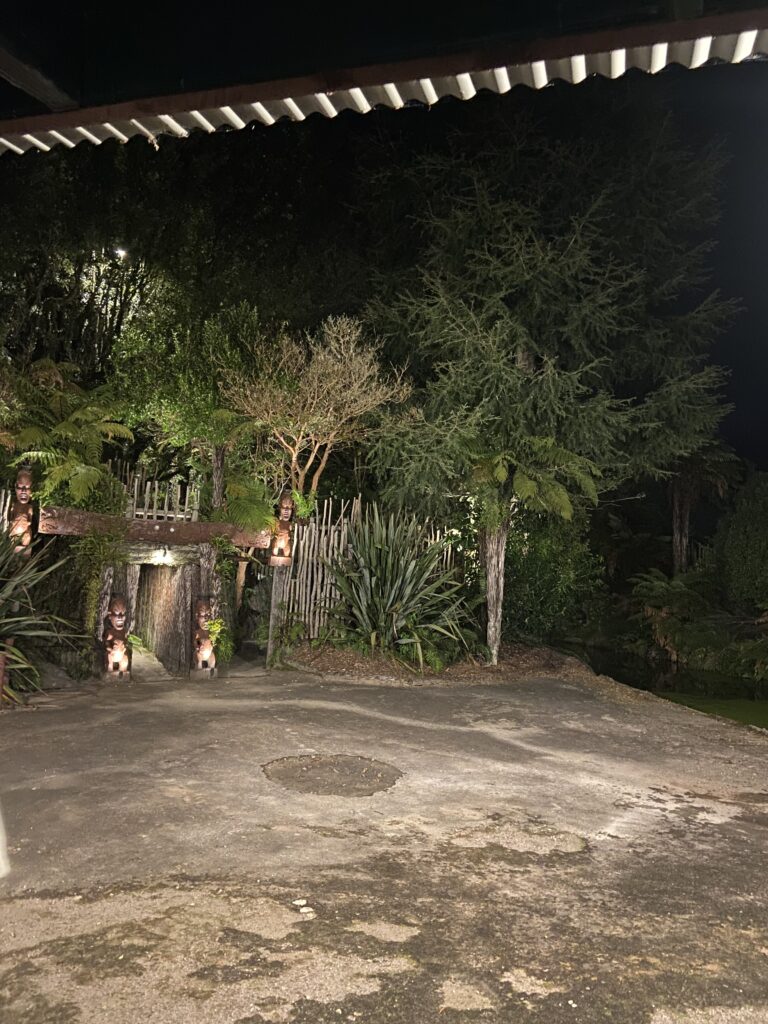
Today we took a bus to the Waimangu Valley and explored the volcano and surrounding geothermal habitat. The Waimangu Volcanic valley created large craters which generated a flurry of bright colors. What stood out to me was how short a time period the volcano was actually active, only in a four year period. This was surprising because of the craters it left behind and how it altered the landscape around it. Another aspect which was interesting was that the specific place where the volcano erupted had become completely taken over by vegetation to the point where you could not see any evidence of the eruption there. This shows just how quickly environments can transform an area. The barren landscape created by the eruption provided the perfect opportunity for plants to take hold in a new area, and this vegetation quickly expanded to cover the open space. In the valley, we saw Frying Pan Lake, which stood out due to the steam rising from it. The lake served as the largest natural geothermal lake in the world, which created the conditions suitable for bright colors to emerge. We then toured Lake Rotomahana, which allowed us to see the valley in its entirety and see geysers surrounding the lake. In the evening, we had a Māori cultural experience. We learned the traditional ways of a tribe and their rituals. What stood out to me from the experience was that during dinner, my table sat with the Chief and was able to listen to him answer questions from my classmates, mainly pertaining to the people’s sustainability efforts. I learned that the people strive only to take from the land what they need, so that there will be resources for those in the future. This ideal resonated with me and seems like a goal we should all strive to follow.